
Safer Gambling Week 2025 – Spot the signs, get support
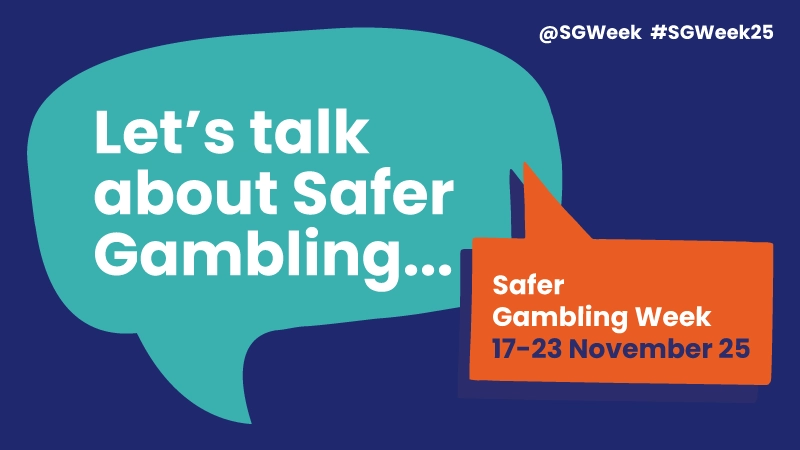

Safer Gambling Week 2025 runs from 17-23 November, so it's time to take a close look at this annual campaign. Organised by the Betting & Gaming Council (BGC), with support from other industry organisations, Safer Gambling Week is now in its 9th year and going strong.
If you haven’t heard of Safer Gambling Week, it’s a “cross-industry initiative to promote safer gambling in the United Kingdom and Ireland”.
Safer Gambling Week 2025 – 3 key objectives
The general objective of Safer Gambling Week is to raise awareness and educate players on safer gambling tools and the resources available to them. The UK is home to an extensive gambling support network, offering help to all sorts of players, no matter what the stage or nature of their relationship with gambling.
Safer Gambling Week aims to signpost players to the best resources for them, and it does this in 3 distinct ways:
Let’s talk about safer gambling
Take action: safer gambling tools
Get support: advice and helplines
All 3 signposts cover pretty much ‘what it says on the tin’, but we’ll explore them in a bit more detail:
Let’s talk about safer gambling
The first thing that Safer Gambling Week does is encourage players to assess their own gambling, and talk about it. The advice given under the banner ‘Let’s talk about safer gambling’ is, in many ways, a first line of defence, and the importance of discussing these issues can’t be overstated.
Things to remember
Safer Gambling Week recommends that players refresh and remind themselves of a few salient points:
- It's good to set limits: Both time limits and financial limits can be effective in helping players to stick to their targets and maintain healthy behaviours.
- Gambling is not a way to make money: Players should keep in mind that gambling is a form of entertainment, and it’s important to never wager what you can’t afford to lose.
- Take a break: Take the time to think about your wagers, and don’t gamble on ‘autopilot’ or let it become habitual.
- Friends and family are important: Prioritise your relationships over gambling; problem gambling can interfere with what matters most in life.
Warning signs
Safer Gambling Week also suggests players familiarise themselves with the main warning signs, so that they can better recognise them in their own behaviours:
- Spending more than you can afford to lose
- Struggling to stop gambling
- Concerned family or friends
- Loss of interest in other activities
- Always thinking about gambling
- Lying or hiding behaviours
- Chasing losses
- Gambling until all your money has gone
- Borrowing or selling to fund gambling
- Needing to wager more and more to get the same ‘buzz’
- Neglecting other important or enjoyable things in life
- Feeling anxious, guilty, depressed or irritable
Take action: safer gambling tools
Safer Gambling Week encourages players to make use of safer gambling tools. This is especially advisable for players who have identified any of the above warning signs in their own behaviour. If this is the case, it’s important that you take action.
Set time and deposit limits
Some of the most effective tools in a player’s safer gambling arsenal are time and deposit limits. You can set these before you make a deposit, and adjust them at any time. All operators licensed by the UK Gambling Commission are required to offer tools to help you manage your time and money.
Block your accounts and self-exclude
If you’re concerned about your gambling and feel that a break is in order, contact the casino and ask them to block your account for a time. Another option is to make use of self-exclusion schemes like GAMSTOP, which blocks all licensed operators for a set time.
Exclusions can be customised and tailored to your preferences, and even include traditional brick and mortar physical betting shops.
Opt-out of marketing
If you don’t want to see marketing materials, there are a few things you can do to minimise the exposure. The Safer Gambling Week website contains specific guides for adjusting your advertisement preferences on different platforms.
Ask your bank to block payments
Another way to help control your spending is to contact your bank. Most banks now offer the option to limit the deposits you make to gambling accounts.
Need support and advice?
The third main element to Safer Gambling Week is about encouraging players to reach out for support. There are several different organisations that struggling players can contact, as well as online forums and chats. These offer a free service with no judgement and access to trained staff. Safer Gambling Week provides a directory of these organisations.
The National Gambling Support Network
The National Gambling Support Network is made up of numerous organisations across Britain. It can be contacted for free, any time of the day or night. Operators can put callers in touch with local organisations, offer advice, and lend support.
GamCare
Part of the National Gambling Treatment Service, GamCare is known for providing struggling gamblers with guidance and information.
Support for Young People
Specifically for young players who are struggling, GamCare hosts the Big Deal website. This offers similar services, tailored to younger and underage players needing help.
Safer Gambling Week – background
The first Safer Gambling Week was held in 2017, taking over from Responsible Gambling Week, which had been running since 2013. The initiative is run by the BGC, which represents the vast majority of UK gambling operators.
In recent years, the program has grown substantially, and responses have largely been positive, with support coming from within the industry and beyond.
Despite this, Safer Gambling Week has its critics. There are some staunch anti-gambling organisations who have questioned the campaign’s motives and labelled it a “cynical stunt”. A couple of years ago, the BGC refuted these accusations robustly, and the good work continues.
Results and numbers
There may be a vocal minority of critics, but the positive numbers speak for themselves. Each year, Safer Gambling Week prompts a measurable surge in the number of players using safer gambling tools and contacting support organisations.
Last year’s campaign saw a 22% year-on-year increase in the number of accounts using safer gambling tools. It also prompted a 14% rise in the use of deposit limits, with 47% of those setting limits for the first time.
The BGC will be hoping to see a similar rise as a result of the 2025 campaign.
What next for Safer Gambling Week?
Safer Gambling Week, regardless of a few critical voices, is a reliably effective cause which genuinely helps players. Its victories are easily quantified and tough to argue with. Safer Gambling Week grows year after year under the guidance of the BGC, and shows no signs of slowing.
Growth in online gambling
Gambling, especially online, is increasingly popular. Increased gambling overall means an increase in problem gambling – though not necessarily proportionately. Whatever the rate though, it will mean an increase which will put strain on support services.
Safer Gambling Week will need to continue expanding its operations and resources. As demand for support grows, the BGC will need to rise to the challenge and ensure that all players can access the tools and support that they need.
This may involve ensuring operators are doing everything they can to help those struggling, and weighing in on the distribution of the levy funded by its members.
Black market impact
As the black market grows, so too may the levels of problem gambling. While this effect is not currently too extreme, it will likely worsen before it gets better. Support organisations will soon feel this, if they don’t already. This comes at a time of turbulence, with the new levy system still finding its feet. Additionally, as illegal platforms don’t contribute to the levy that funds them, support organisations may find their resources spread thin.
Farewell to GambleAware
As part of the funding shuffle and the introduction of the new levy, GambleAware is to be closed. Its responsibilities will be transferred to the government, to be carried out largely by the NHS. There will likely be teething problems, but a more centralised system makes sense. GambleAware is considered a great success story, having helped tens of thousands of players since its conception. It is expected to continue doing so until April 2026.