
UKGC CEO Rhodes to quit
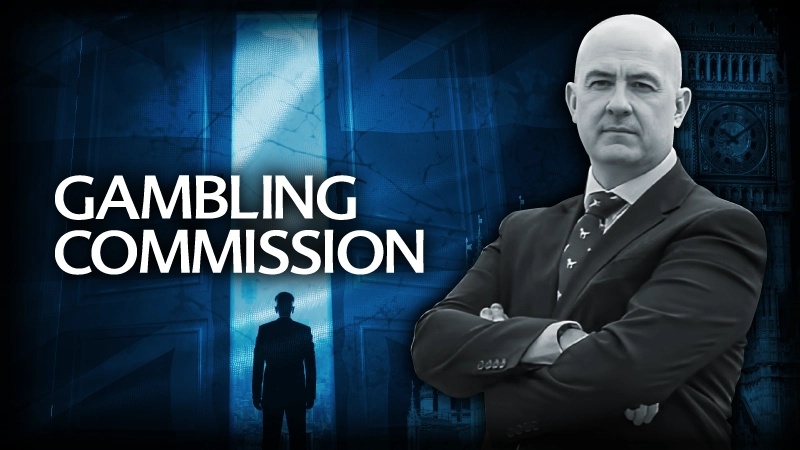

In the midst of a turbulent period in the British gambling industry, Andrew Rhodes has announced he will step down as CEO of the Gambling Commission. His departure will officially take place on 30 April 2026.
Rhodes’ tenure at the UKGC
Rhodes has led the Gambling Commission (UKGC) for 5 years. In this time, his role has seen him oversee a historical overhaul to British gambling legislation, following the 2023 White Paper and resulting Gambling Act Review.
Stake limits
In April 2025, stake limits were introduced for British slot games. For players aged 24 and under, the per-spin stake limit is £2. For those aged 25 and over, the limit is £5. Rhodes played a key part in pushing through this legislation, and encouraged “evidence-based” methods to define the limits.
This effort to protect younger players was supported by many, but drew criticism for seemingly ignoring the adverse effects that other regulators had experienced introducing stake limits. The primary concern is players being pushed towards the black market.
Affordability checks
Another controversial aspect of Rhodes’ tenure was the push for affordability checks. Under his leadership, the Gambling Commission introduced financial risk assessments designed to identify players who may be gambling beyond their means.
Many welcomed this effort to reduce gambling-related harm. Others raised concerns about privacy and disruption. Rhodes himself defended the move, arguing that the measures were minimally invasive, and necessary to protect vulnerable customers.
When affordability checks eventually came into play, the UKGC had refined them to the point where they were largely frictionless. As with stake limits, it remains to be seen if the industry will suffer.
Gambling Survey for Great Britain
In the official UKGC announcement of Rhodes’ forthcoming departure, one of his key contributions mentioned is the creation of the Gambling Survey for Great Britain (GSGB), “now one of the largest surveys of gambling behaviour in the world”.
The GSGB replaced the long-running Health Survey for England, and has been praised for its rigorous methodology and in-depth data collection.
One of Rhodes’ priorities throughout his tenure has been to prioritise regulation informed by data. The GSGB is the Commission’s effort to ensure that the data used to guide decisions is high-quality.
Tackling the black market
During Rhodes’ time at the UKGC, combating the black market became one of the primary objectives of the Commission and the wider industry. Rhodes sought to expand ‘disruption tactics’ and emphasised the importance of collaboration between the Commission and law enforcement agencies. Under Rhodes, the Commission also targeted payment providers and worked with search engines to block illegal sites.
However, it has been suggested that affordability checks and stake limits brought in under Rhodes will worsen the issue – a pattern observed in other European countries.
Wagering requirements
Also approved under Rhodes are new rules capping wagering requirements on bonuses at 10x. This has been widely welcomed, and seen as a meaningful improvement in transparency and fairness. It reflects a broader regulatory trend towards clearer, more responsible marketing practices.
Mandatory gambling levy
Prior to Rhodes’ tenure, operators had an option to pay into a levy to fund gambling-related care, research and charity work. In 2025, a new mandatory levy came into effect, expected to generate around £100 million annually for these organisations. Most have welcomed the introduction of the levy – one of the less contentious of Rhodes’ initiatives.
Enforcement and compliance
One trend we saw across Rhodes’ tenure was an increasing clampdown on operators who failed to comply with their licence requirements. Under Rhodes, the UKGC issued the biggest operator fines in its history, including a record £19.2 million fine to William Hill in 2023.
Rhodes; the verdict
The UKGC’s official announcement of Rhodes’ resignation is predictably positive. There’s no denying that Rhodes accomplished a lot, pushing hard for significant changes that reflect the 2023 White Paper, and are centred around player wellbeing.
However, it could be argued that he may have pushed too hard in places, failing to acknowledge warnings from abroad, and inadvertently putting players at risk of turning to the black market.
Commenting on Rhodes’ departure, Charles Counsell, Interim Chair of the Gambling Commission, said “Andrew has provided outstanding leadership for nearly five years and leaves a strong legacy.”
Offering balance, Grainne Hurst, CEO of the Betting and Gaming Council, said “His hands-on approach and willingness to engage directly with the industry helped foster a more informed and productive working relationship, even where views did not always align.”
There are some undeniable victories on Rhodes’ resume, including the introduction of the GSGB and the mandatory gambling levy. Ultimately, it’s too soon to say what Rhodes’ legacy will be. His initiatives will either stabilise and prove to be for the greater good of the industry, or they may have the effect of damaging the industry by pushing players away from legitimate sites.
What next for the Gambling Commission?
Rhodes himself commented, “It's been a privilege to lead the Gambling Commission through such an important period of change. I'm proud of the progress we've made [...] I leave with confidence in the organisation, its people and the work still to come.”
Rhodes is expected to announce his new role soon, and the UKGC will no doubt already be in the process of searching for Rhodes’ long-term replacement. In the meantime, Rhodes' deputy, Sarah Gardner, will be Acting Chief Executive.
The British gambling industry is not out of the woods as far as the White Paper Review goes. Rhodes’ successor will inherit a number of unresolved issues and have no shortage of work on their hands.