GambleAware to NHS handover imminent
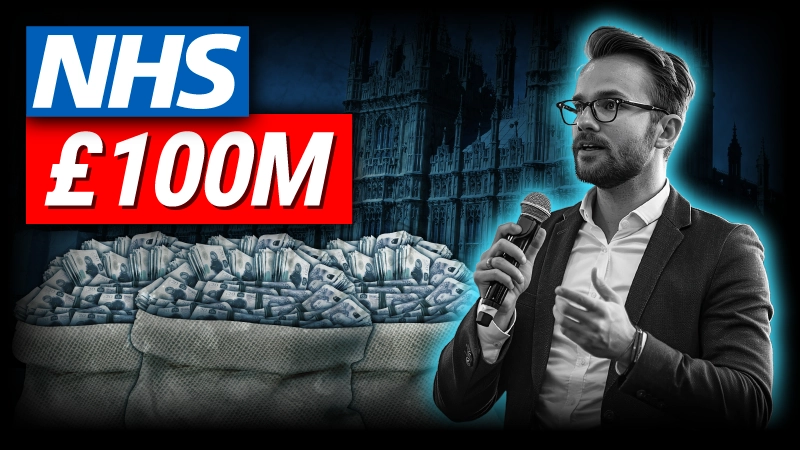

In April 2026, after many years of service, GambleAware will close its doors. One of GambleAware’s responsibilities has been to allocate funding to treatment services, and this role will be transferred to the NHS – to the tune of £50m, half of what is collected through the levy..
This is a substantial shake-up with plenty of scope for error, and concerns have already been raised regarding reported mismanagement of the transition. Here, we’ll take a look at what’s happening, why this change is being made, and the challenges ahead.
What is GambleAware?
GambleAware is a charity established in 2012 (originally as BeGambleAware) with the goal of reducing gambling-related harm across Britain. It has been in charge of distributing the levy funding raised amongst gambling support services and coordinating the National Gambling Support Network.
In April 2026, as the new system comes into effect, GambleAware will be closing its doors. For the British gambling industry, this marks the end of an era. GambleAware, while not without its critics, is highly regarded by many, and fulfilled its role effectively.
Through GambleAware and its partners, huge numbers of players have received support and access to services. However, the new, non-voluntary levy system necessitates a more public, centralised system.
Under the new framework, responsibility for commissioning and allocating treatment funds will sit with the NHS.
The levy
The shift is a function of the mandatory gambling levy, which came into play in April 2025. The levy requires operators to contribute a percentage of their revenues to fund player welfare organisations and initiatives
Operators will pay between 0.1% and 1.1% of their gross gambling yield, with online gambling operators paying some of the highest rates.
The levy is expected to raise around £100 million annually, about half of which will be allocated by the NHS to organisations offering treatment services to help problem gamblers.
The current proposal is to allocate 50% to treatment, 30% to prevention (to be distributed by the Office for Health Improvement and Disparities) and 20% to research (to be distributed by UK Research and Innovation).
This split prioritises frontline care, but it could be argued that greater emphasis should be placed on prevention. The Commissioners in charge of divvying up these funds need to remain flexible and reactive.
Is the NHS ready?
Taking over the allocation of funds will be NHS Commissioners representing England, Scotland and Wales.
There are concerns about the NHS taking on this role, with some feeling that the Health Service has too much on its plate already, and that its reputation for being sluggish and bureaucratic could cause problems that may impact service users.
Ultimately, it remains to be seen how effectively the NHS will manage its new role, but it must put users first and ensure that nobody suffers as a result of the possible (or even likely) teething problems to come.
Benefits
Despite some critics of the move, there are some potential advantages to the shift:
- A more integrated system: With gambling treatment sitting alongside other NHS services, such as addiction treatment and mental health care, a more comprehensive service can be provided.
- Long-term stability: The new fund can be expected to produce a more consistent, reliable and substantial source of funding for services.
- Scalability and flexibility: As demands and requirements fluctuate, the Commissioners will be able to allocate funds accordingly, and to take into account regional differences.
- Improved data sharing: NHS involvement enables better use of health data, population-level insights and research.
- Accountability: The NHS is already subject to audits and performance monitoring, which could make it easier to track outcomes and value for money.
Drawbacks
There are also valid concerns surrounding the transition:
- NHS readiness: Many feel that the NHS is too slow and too admin-heavy to deliver results quickly and effectively.
- Startup costs: Establishing the new system will require work and resources, eating into the levy before any funds have been distributed.
- Farewell to GambleAware: This is an organisation that met its goals and served its purpose. The closure of GambleAware marks the end of a positive era, and also means leaving behind the knowledge, experience and expertise of the GambleAware team.
- Disruption to users: The shift may lead to some service users getting left behind or falling through the cracks, and this could have catastrophic results on an individual level.
- Uncertainty for sector charities and support organisations: Gambling charities including Gordon Moody suffer an uncertain future, and have requested emergency ‘interim funding’ to smooth the transition.
- Loss of other services: GambleAware has done more than just allocate funds. It has also been involved in advocacy, policy influencing and education. In the shake-up, will all of GambleAware’s activities be replaced?
Other countries
The model of a statutory levy combined with public funding allocation is already used in many countries around the world. Australia, New Zealand and Norway all use comparable systems to collect and distribute funds.
We don’t have a great record when it comes to learning from other countries’ successes and mistakes (the UK Gambling Commission’s regulation-tightening initiatives being a prime example of this). The NHS should look to its international counterparts for inspiration and guidance.
How and when
There aren’t a lot of details available at the moment, and it’s unclear whether this is because decisions have yet to be made, or because things are being kept under wraps for now. Either way, it’s not likely to inspire confidence.
When will we know if it’s working?
Unfortunately, we’ll have to wait and see how the NHS manages its 50% of the levy fund. Given the nature of the NHS and the scale of the transition, we can’t expect results overnight. As 2026 unfolds, we’ll gradually get a clearer picture of how the situation is being managed.
The NHS is expected to publish regular reports on how it allocates funds, which should reveal its priority areas.
What data do we need?
There are certain key metrics that we’ll need to see before any judgements can be made on the success, failure or otherwise of the transition. Some of the measurable outcomes that will shed some light include:
- Service use statistics
- Consistency of coverage across Britain
- Patient outcomes and recovery rates
- Waiting times for service users
- Actual distribution of funds across prevention, treatment and research
Once this data is published, we’ll have a much clearer idea of how smoothly the transition has gone, and which areas need work.
What might a successful transition look like?
The best case scenario here is that the NHS manages to assume its new responsibilities with minimal turbulence. A successful transition is one that – at least from a collective users’ perspective – is frictionless. It should also value the UK’s long-serving gambling charities like Gordon Moody.
Summary
The NHS will soon be taking on the responsibilities currently held by GambleAware, which include distributing the 50% of the levy fund to treatment services. The NHS will need to work closely with gambling harm treatment providers to ensure that those who need help can continue to access it. Concerns have been aired, but only time can tell how successfully this transition is being managed.
Watch this space.